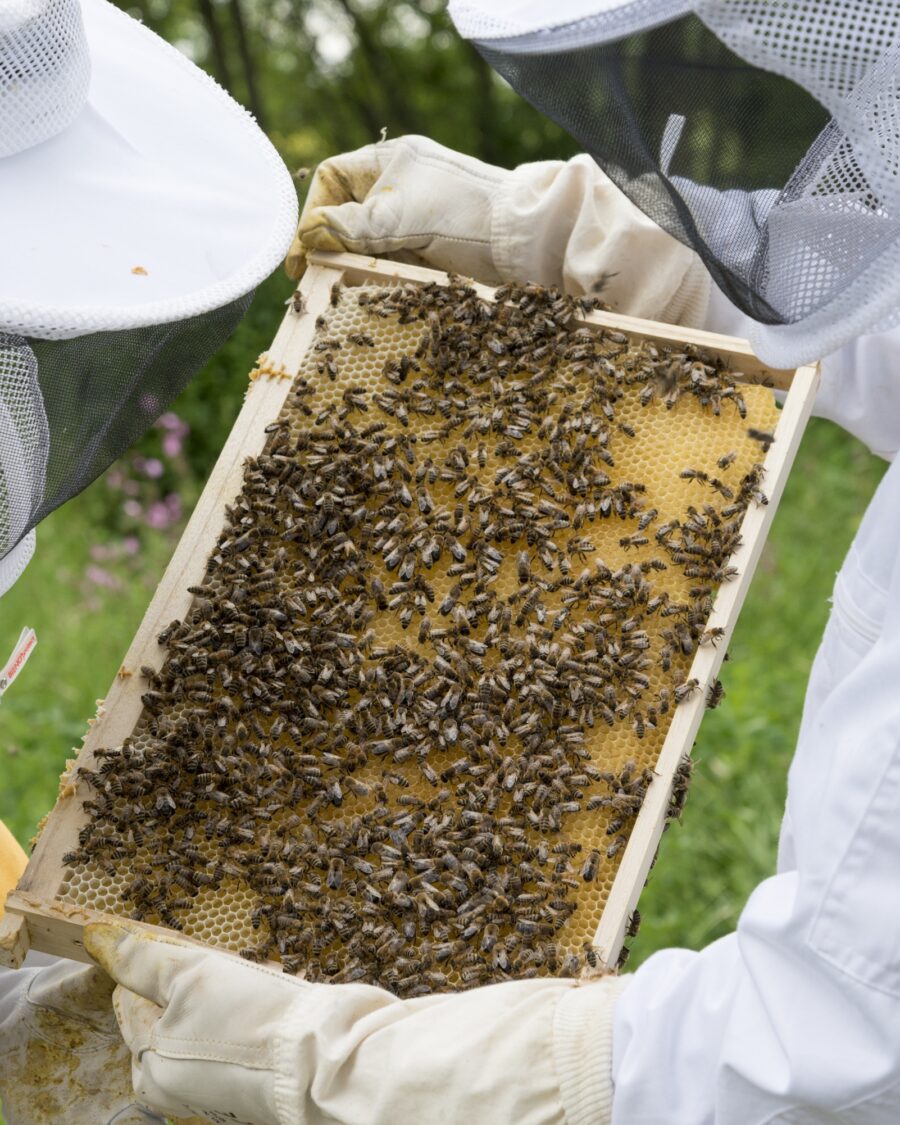
Bulgaria’s rich and varied flora makes it one of the most biodiverse honey-producing countries in Europe. For centuries, Bulgarian beekeepers have drawn on this diversity, developing the expertise to turn nectar into the herbal, field and acacia honey that form the backbone of our range.
Our high-end honey, oak honeydew honey (дъбов манов мед), comes from a single place: the ancient oak forests of Strandzha Nature Park in southeastern Bulgaria, the second-largest oak forest expanse in Europe. Unlike flower honey, it isn’t gathered from nectar but from mana, a sweet secretion left on oak leaves by tiny sap-feeding insects — and it takes the region’s rare, sea-influenced microclimate for bees to collect enough of it to make honey at all.
Ancient oak woodland, a microclimate shaped by three nearby seas, and generations of beekeeping expertise have made Strandzha oak honeydew one of the rarest and most sought-after honeys in the world, and earned it Protected Designation of Origin status within the EU.
Working directly with Bulgarian beekeepers, we bring both the everyday and the exceptional, from our herbal, field and acacia range to small, limited batches of Strandzha oak honeydew, to markets in Southeast Asia, the GCC, and the US. As with everything we export, our honey is chosen through first-hand experience and a rigid selection process.