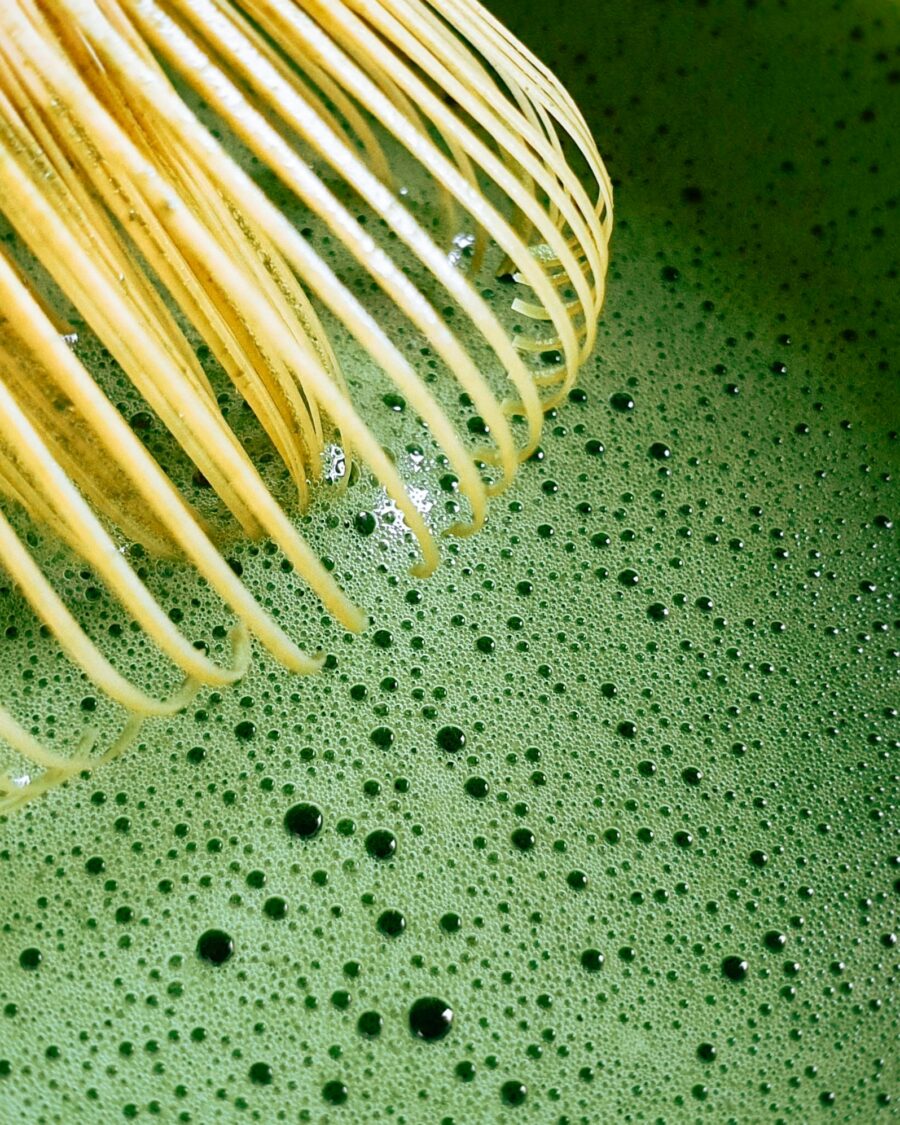
Japanese Ceremony-Grade and Everyday-Blend Matcha
Matcha is a powdered, whole-leaf green tea rooted in centuries of Japanese tea culture. Unlike ordinary green tea, where the leaves are steeped in hot water and then discarded, matcha leaves are shade-grown, steamed, dried and ground into a fine powder, so what ends up in the bowl is the leaf itself, not an infusion of it.
Matcha is inseparable from Uji, near Kyoto, where tea has been grown since the 13th century. It was here, in the 15th and 16th centuries, that growers developed the shade-growing method that turned ordinary leaves into tencha (the base leaf ground into matcha) and the technique remains at the heart of ceremonial-grade production today. Only the first harvest of the season, the youngest and most tender leaves, goes into this top grade, and it is still stone-milled slowly, a few grams at a time, to protect the leaf’s colour, aroma and flavour from the heat a faster mill would generate.
This combination, a single historic growing region, first-harvest leaves, and slow stone-milling, is what separates genuine ceremonial-grade matcha from the later-harvest, machine-milled powder sold for lattes and baking, and why Uji matcha in particular carries a reputation few other origins can match.
Matcha as an accessory for everyday life
With years spent living and working in Japan, we’re able to source and bring both grades to Bulgaria and the wider Eastern European market: High-end ceremonial-grade matcha for those preparing it the traditional way, and a more accessible everyday blend for the cafés, gyms and kitchens now building matcha into their regular menu. Both are chosen, as with everything we import, through first-hand experience and a rigid selection process.